
Visualising theory 1: Grief and loss
5th July 2026
I have been thinking about grief and loss this weekend and looking back at a case study I published on this topic after the pandemic. It used a series of images to make reflective links between contemporary theories of grief and the lived experience of loss. I made this diagram to summarise how grief theory has changed over time. It reminds me that there are different ways of thinking about grief processes and different ways of grieving. These normal life processes can be painful and deeply impactful.
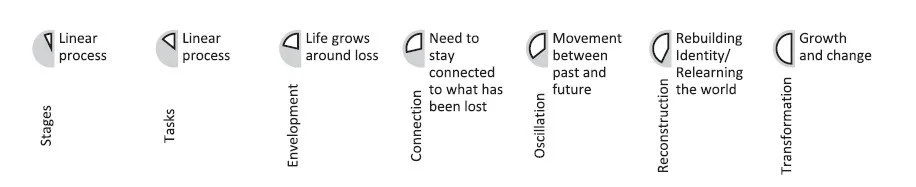
Diagram showing changes in conceptualisations of grief.
In the first image that shows up in the article, I was using objects as a way to visually communicate my perspective on grief. I wrote: “the feather represents the symbol of the soul. Stones represent the body and the world we live in. Life holds the soul; death lets it fly free. However, in doing so, it leaves me stone cold, alone” (Bateson et al., 2021, p.2). Photographs capture and witness. They can hold thoughts, emotions and body feelings for us.
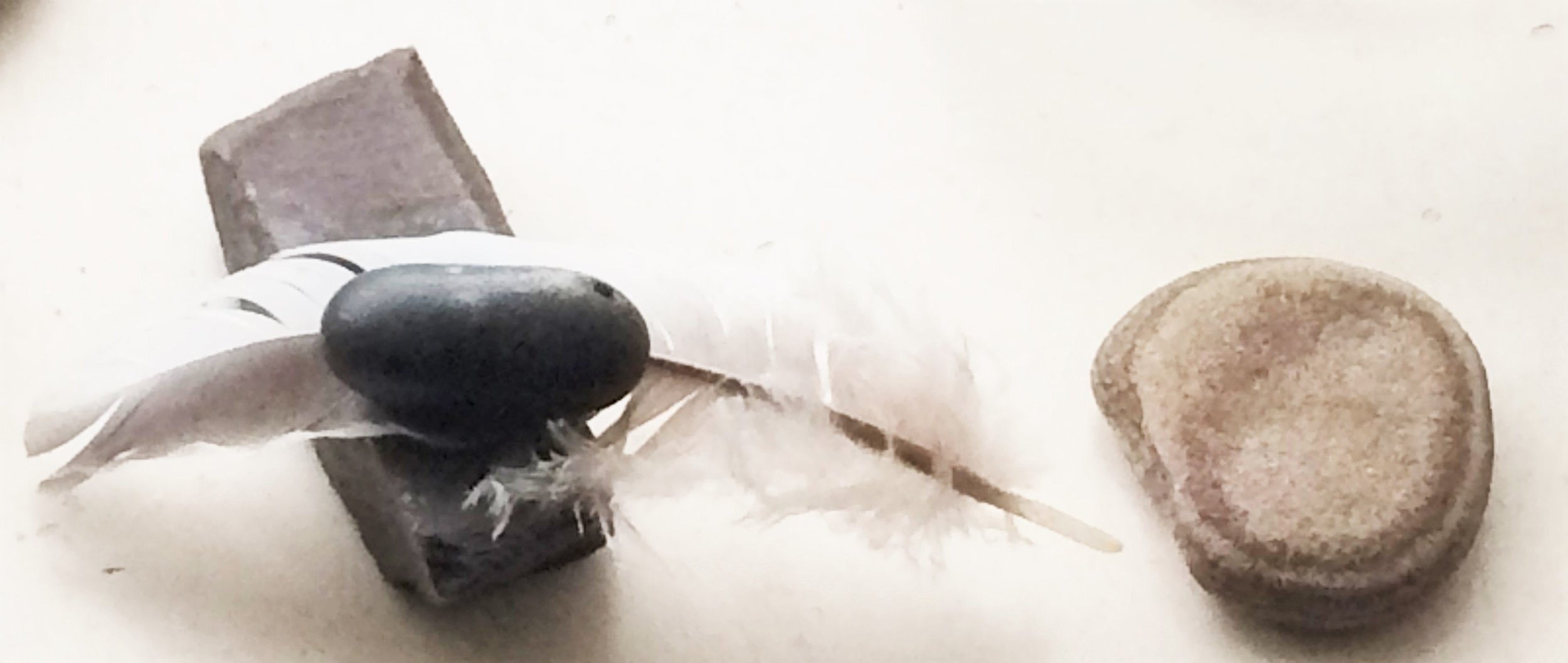
Photograph – Feather and Stones (Grief) © Ren Bateson 2016 (Journal Entry, 26th September 2016).
The second image is about what might happen if difficult emotions, like anger, are masked through eating behaviours that hurt our bodies when we experience loss. I wrote: “This masking of emotions, this disowning of the chemical reactions that are feelings within us, arguably leads to their being trapped in the body, unexpressed and unseen” (Bateson et al., 2021, p.3). There is a potential link between this and how trauma might transfer through the generations of our families. This means that we might need to find a range of methods to express what is in our bodies and find ways to make sense of that.
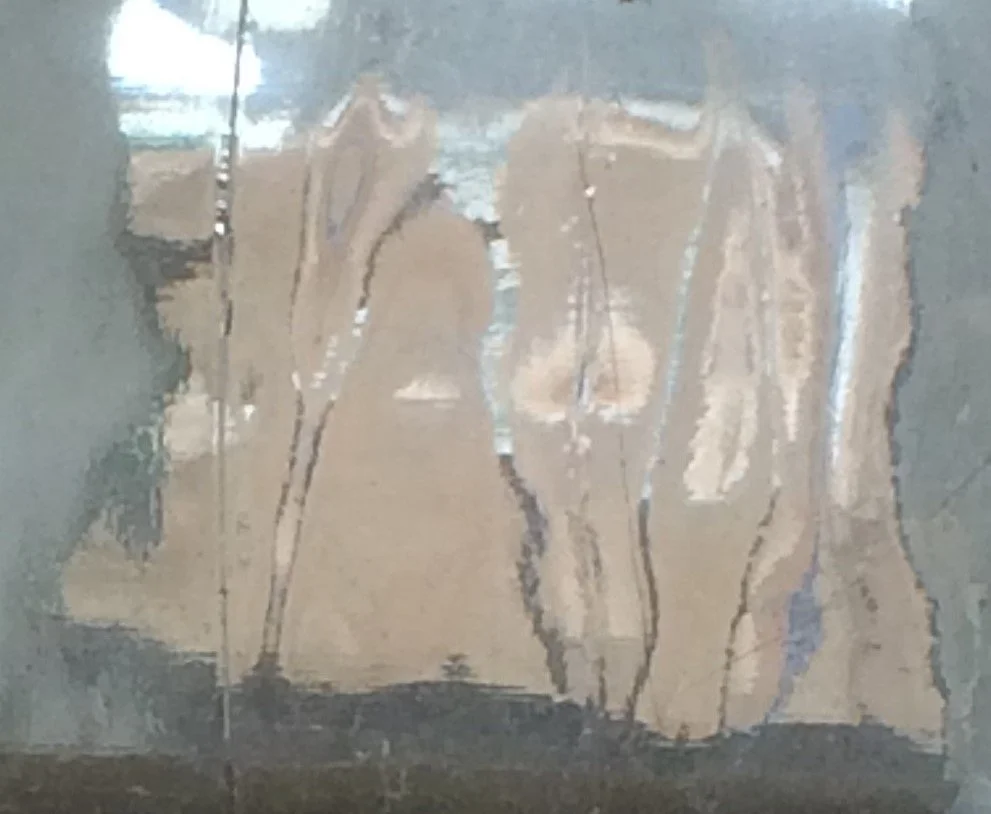
Photograph – Glass Bottle (Hidden Emotion) © Ren Bateson 2016 (Journal Entry, 3rd July 2016).
This image of a shadow on a wall refers to memory of loss experiences. It is the third image I use and highlights the way the pain of loss can be intensely re-lived. Time is erased or the gap between past and present is bridged. Loss is a bit like trauma in that way. It gets triggered. An unthought known is an internal, body-based sense of something that has not yet been expressed. Finding ways to capture unthought knowns and to bring them to conscious awareness moves them from the body into the mind.
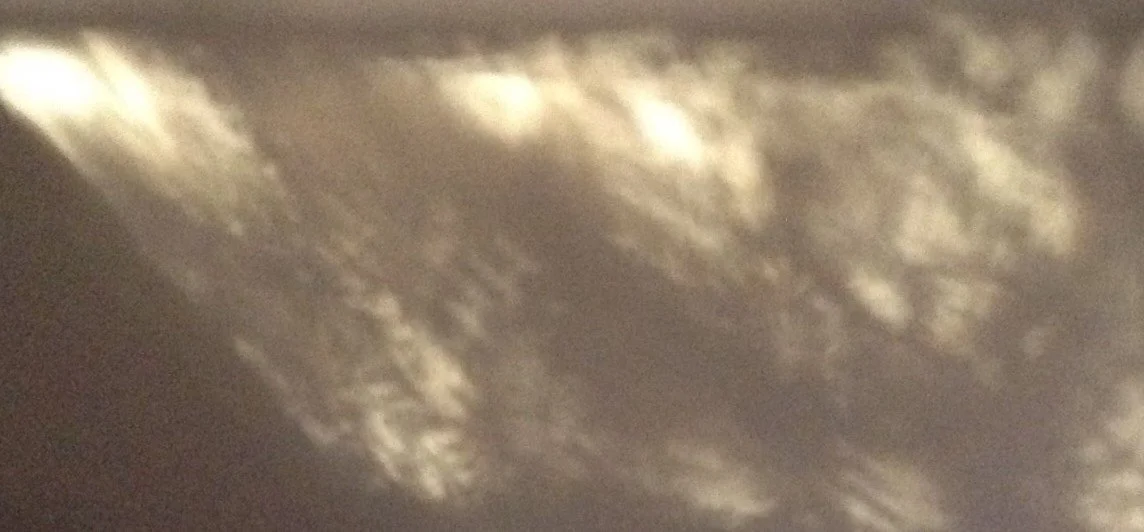
Photograph – Wall Shadow (Unthought Known) © Ren Bateson 2016 (Journal Entry, 7th November 2016)
This penultimate image is about transformation. I wrote: “Lichen can transform wood, which I see as a visual metaphor for growth and identity change. Both loss and trauma have the potential to lead to growth” (Bateson et al., 2021, p. 5). Grief is a healing response to loss.
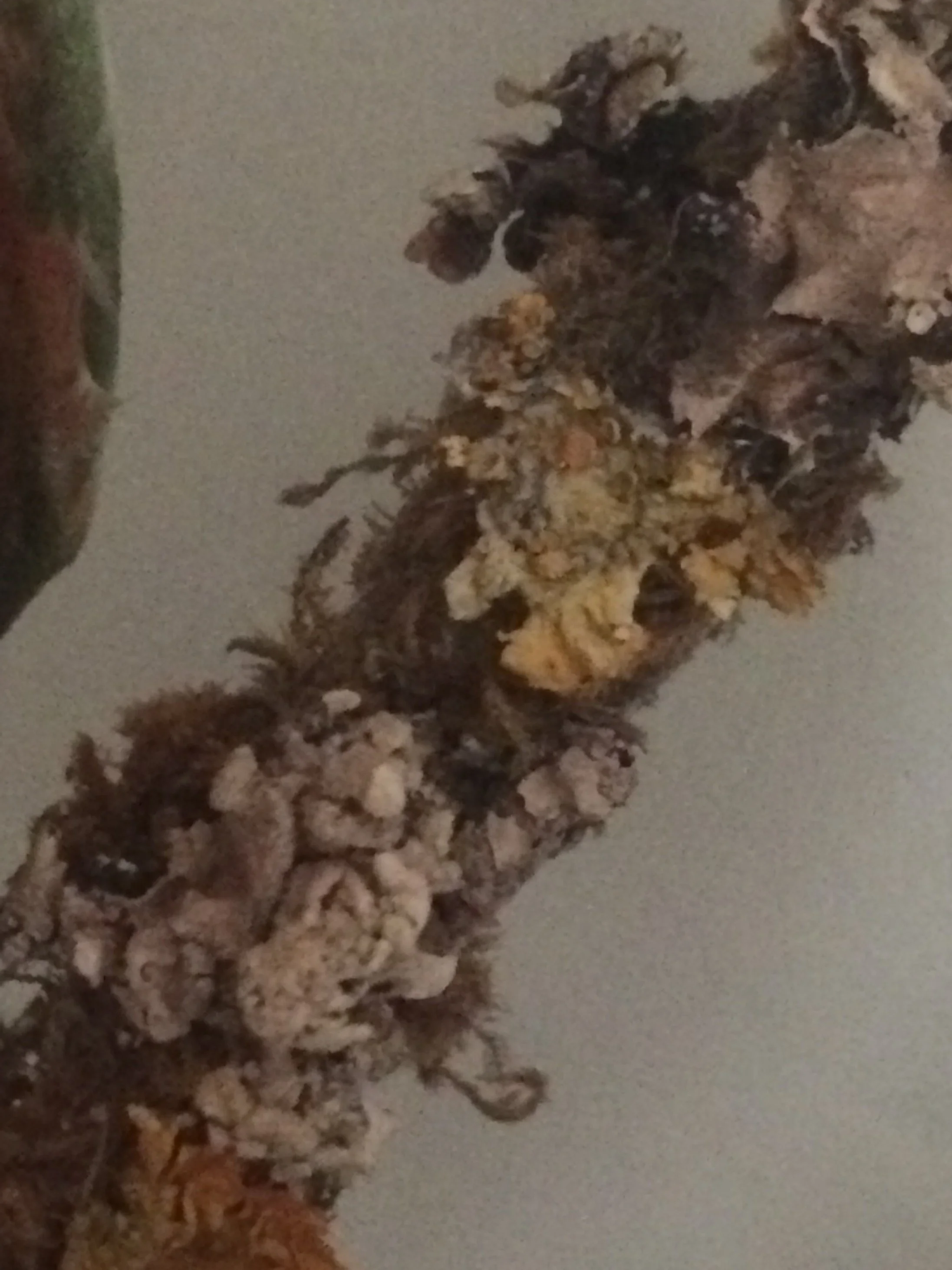
Photograph – Lichen (Growth) © Ren Bateson 2016 (Journal Entry, 31st August 2016).
The final image used in the article helped me think about how grief moves between poles of loss and restoration through a visual illusion. I wrote: “My eye flits from the lines and ridges of the front can, to the rear one and back again, over and over, until I look away” (Bateson et al., 2021, p.7). It is a flexible, waxing and waning process that takes place over time. Thinking about grief in this way allows for differences in the way we find our way through it: Looking back to the past, looking forward to the future, or perhaps, sometimes a combination of the two.
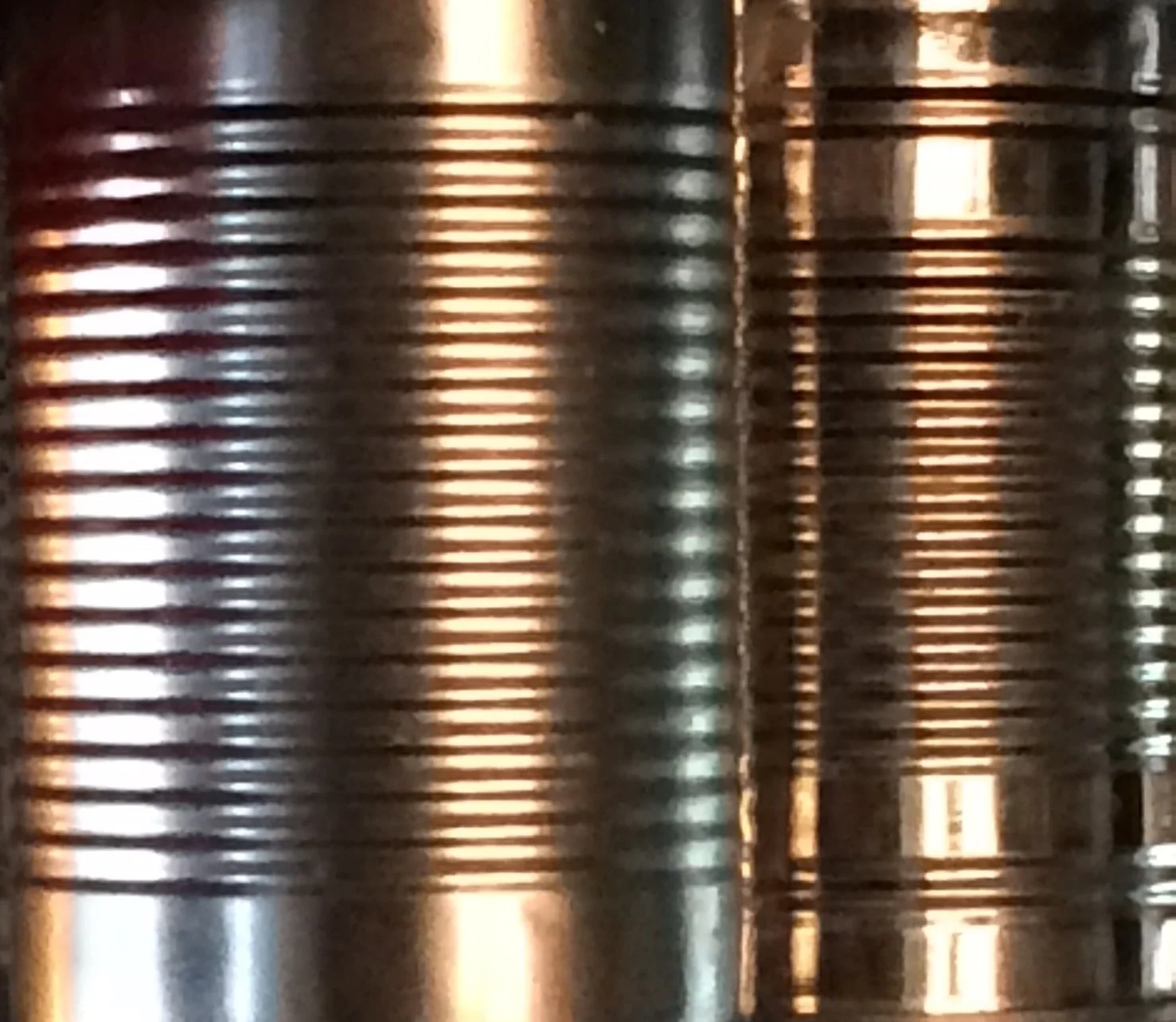
Photograph – Tin Cans (Loss and Restoration) © Ren Bateson 2016 (Journal Entry, 14th October 2016).
There are many different types of loss experience including bereavement, suicide, pregnancy loss, abortion, miscarriage, pet loss, divorce, relationship ending, job loss, job change, house change, location change, chronic illness, loss of safety, loss of trust, aging, adoption. Some losses are harder to mourn because of the way the social fabric that we live within has been woven. We might find we are not be able to talk openly about what has been lost or an experience might not be considered a loss. Finding ways to communicate our losses, through words on a page, speech to another, an image or movement can help us start to rebuild, reconnect, relearn and grow. Grief is a healing process.
Reference List
Bateson, K., Lees, J., Proctor, G., & Shloim, N. (2021). Fear of losing it: an auto-ethnographic case study exploring re-triggered loss experiences during psychotherapy training. British Journal of Guidance & Counselling, 49(5), 689–700. https://doi.org/10.1080/03069885.2020.1772461